Εμφάνιση αναρτήσεων με ετικέτα NUCLEAR ENERGY. Εμφάνιση όλων των αναρτήσεων

Κυριακή 28 Αυγούστου 2016

Protests threaten China’s nuclear energy plans

NIMBYism is on the rise in China, and without better dialogue between stakeholders, threatens to undermine Beijing’s nuclear plans and efforts to meet its COP21 goals.
Protests threaten China’s nuclear energy plans
Over the past two weeks, thousands of residents of Lianyungang, a town in Jiangsu province, have gathered,halting preparations for a proposed nuclear waste reprocessing plant. Lianyungang is one of six sites under consideration for the project, but the two companies developing the plant, China National Nuclear Co. (CNNC) and France’s Areva, have not yet decided on a final location.

Κυριακή 19 Ιουνίου 2016

UK government needs a nuclear plan B, says Tim Yeo

Ministers need to talk to the Chinese about fast-tracking the planned reactor at Bradwell in Essex because the future of the £18bn Hinkley Point project is so uncertain, according to a leading pro-nuclear campaigner.
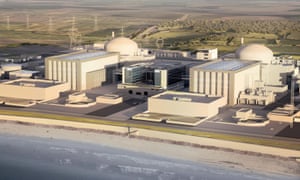
Artists’s illustration of the Hinkley Point nuclear power station project
 The Hinkley project in Somerset has been hit by a series of delays. A final investment decision has been put back to September. Photograph: EDF Energy/PA
Tim Yeo, a former chair of the energy and climate change committee, said the government should also consider whether the Russian state operator, Rosatom, or the British state could build new atomic plants.

Παρασκευή 19 Φεβρουαρίου 2016

Germany Hails Landmark Achievement In Fusion Energy

Germany Hails Landmark Achievement In Fusion Energy
The Wendelstein 7-X won’t be winning any awards for catchy name of the year, but the massive new German prototype fusion reactor does represent one of the biggest advances in fusion power in decades. The device also exemplifies what might be the start of a nascent trend; European leadership in energy research and experimentation.

Παρασκευή 30 Οκτωβρίου 2015

Russia is creating a global nuclear power empire

Russia is moving to create a global nuclear power empire — a bold power play that elicits opportunity and risk far beyond the nuclear reactors themselves.
Russia is creating a global nuclear power empire
With its ploys in Ukraine and Syria coming largely unanticipated in Western eyes, Russia has cultivated a tendency to pursue foreign policies that are not immediately obvious to surface-level observers.

Κυριακή 2 Αυγούστου 2015

Nuclear Industry Future Far From Clear

Nuclear Industry Future Far From Clear
My uncle was 17 years old, proud of his martial Prussian heritage, when he joined the U.S. Marines, just in time to make the landing on Guadalcanal. He made it through that encounter, was later wounded on Okinawa, recovered, and was training for the invasion of the Japanese mainland when Hiroshima and Nagasaki went up in atomic flames. When we buried him a few years ago, the Marine Honor Guard spokesman on hand said that most of the 500,000 Purple Hearts minted for the invasion were still in inventory. That is fortunate for Americans, though it meant woes a thousand fold had come raining down upon the Land of the Rising Sun.

Πέμπτη 7 Μαΐου 2015

Germany’s Nuclear Cutback Is Darkening European Skies

Germany’s influence in Europe is unquestionable, but it appears that some of its neighbors may be adversely affected by recent German decisions; and Greece is not the neighbor in question here. France has been reporting heavy levels of air pollution which authorities in the country are blaming on diesel cars there. But the real culprit may in fact be the renewed German penchant for coal power.

Germany’s Nuclear Cutback Is Darkening European Skies
Up until a few years ago, Germany, along with France, was at the forefront of nuclear power use. But after the Fukushima disaster in Japan in 2011, the Germans were quick to begin phasing out nuclear power. In some countries, phasing out nuclear power would be easy, but in 2011, Germany obtained 25% of its power from nuclear sources. This nuclear power generated no carbon dioxide emissions of course, and little in the way of other forms of pollution. But after starting the phase out of nuclear power, Germany still needed to find a source of replacement power.

Τετάρτη 25 Μαρτίου 2015

Beyond Iran And Pakistan: 7 Nuclear Wannabes

The meltdown at the Fukushima Daiichi nuclear complex in 2011 following the Japanese tsunami forced a major rethink of nuclear power as a safe form of electricity generation. As radiation from the plant spewed into the ocean and nearby communities following an immediate evacuation, the world reaction was swift and dramatic. Within days the spot price of uranium collapsed. Japan ordered the shutdown and maintenance of all its existing reactors. Germany, a major consumer of nuclear power, permanently closed 8 of its 17 nuclear reactors; other European countries shelved their nuclear plans.
Beyond Iran And Pakistan: 7 Nuclear Wannabes
While fear still lingers of a nuclear catastrophe on a similar scale as Fukushima, or earlier accidents such as Three Mile Island or Chernobyl, that hasn’t stopped a slew of countries from moving forward on plans to develop nuclear plants as an adjunct to existing power sources like hydro, coal, natural gas and good ol’ oil.

Τετάρτη 11 Μαρτίου 2015

China Builds Nuclear Reactors in Earthquake-Prone Pakistan

China has decided to defy international norms and build new nuclear reactors in Pakistan.
China Builds Nuclear Reactors in Earthquake-Prone Pakistan
While the U.S. and Europe see stagnant growth for commercial nuclear power, the same is not true in Asia. China is not only building nuclear reactors at home, but it is exporting its technology abroad. Of particular concern is its construction of nuclear reactors in Pakistan. China helped build two reactors at Chashma, which came online in 2000 and 2011 respectively. More recently, it has decided to double the size of the Chashma power plant, with two additional reactors under construction. And it is also constructing a new nuclear power plant near Karachi, using China’s next generation ACP-1000 design.

Κυριακή 22 Φεβρουαρίου 2015

Is There Any Hope Left For Nuclear Energy?

Can nuclear help avoid the worst effects of climate change?
Is There Any Hope Left For Nuclear Energy?
The International Energy Agency recently provided a roadmap for nuclear power, detailing how the technology could help keep global temperature increases within a 2-degree scenario. According to the IEA report, between 2015 and 2050 total installed nuclear power capacity around the world would need to more than double from 396 gigawatts (GW) to 930 GW.

Τετάρτη 11 Φεβρουαρίου 2015

Some issues in respect of Indian’s nuclear liability law - I

Seemingly, the highlight of President Obama’s visit was the announcement that India and the United States had come to an understanding on the two major issues that stood in the way of the successful full implementation of the Indo-US nuclear deal.
While the first issue related to some of the provisions of the Indian Civil Liability for Nuclear Damage Act (CLNDA), the second concerned a successful negotiation of the administrative arrangements for the implementation of the India-US 123 nuclear agreement. The issues in respect of CLNDA related to: (i) the conformity of CLNDA with the provisions of the Convention on Supplementary Convention (CSC), signed - but not yet ratified - by India; (ii) Sec. 17(b) of CLNDA, which allowed for Right of Recourse against the supplier; and (iii) Sec. 46, which allowed for legal cases against the operator under Acts other than the CLNDA. The administrative arrangements under discussion were with respect to the accounting and tracking of US-supplied nuclear materials and materials produced with the use of US-supplied equipment.

Σάββατο 29 Νοεμβρίου 2014

China’s Nuclear Power Gamble Is Mind-Boggling

The numbers that define China’s progress over the last 50 years are staggering. Over 300 million people lifted out of poverty. Over 160 cities with more than 1 million inhabitants. Over 630 million Internet users.. And now, following the recent climate change deal with U.S., China has a massive price tag of $2 trillion to implement climate policy changes. In order to cap carbon emissions and generate 20% of the country’s electricity from renewables by 2030, Bloomberg estimates this would require 1,000 nuclear reactors, 500,000 wind turbines or 50,000 solar farms. “The pledge would require China to produce either 67 times more nuclear energy than the country is forecast to have at the end of 2014, 30 times more solar or nine times more wind power. That almost equals the non-fossil fuel energy of the entire U.S. generating capacity today,” wrote Bloomberg.
China’s Nuclear Power Gamble Is Mind-Boggling
With China already being the global number one in wind and solar energy, financing more projects for these in 2013 than all of Europe combined, it would seem logical for it to turn to these two sources for that massive expansion. However, much chatter from Communist officials is putting the attention squarely on nuclear. In early November, Guo Chengzhan, the deputy director of the National Nuclear Safety Administration, stated that "nuclear power is China's only scalable replacement energy and is a vital choice in China's energy strategy”, while Tsinghua University expert Teng Fei told Reuters that without nuclear, China’s peak carbon target could “be delayed by as long as a decade.”

Τετάρτη 5 Νοεμβρίου 2014

8 Countries With Nuclear Power Plants Most At Risk Of Tsunamis

The tsunami that destroyed a nuclear reactor at Fukushima, Japan, caused a major re-think of nuclear power, which up to the accident in 2011, had been considered a relatively safe, clean form of electricity generation.
8 Countries With Nuclear Power Plants Most At Risk Of Tsunamis
The tsunami that followed shortly after a 9.0 mega-quake off the east coast of Japan was shocking in its magnitude - killing close to 16,000. But it was soon apparent that another disaster was in the making, when the surging waves inundated pumps used to cool down the reactors at the Fukushima Daiichi nuclear power complex.

Σάββατο 12 Ιουλίου 2014

Seeking nuclear legitimacy

The annual meeting of the 48-member Nuclear Suppliers Group (NSG) was recently concluded in Buenos Aires, where India's membership issue was discussed with no clear answer. Several countries, including the US, UK, France have remained supportive of India's membership although countries such as China, among a few others, have remained opposed to the Indian membership issue.
It is in the interests of India to be part of the NSG if it has to be able to shape the new non-proliferation architecture and exercise a greater say in how the global rules are played. For the international community as well, it is beneficial to have India inside the tent than outside.

Σάββατο 25 Ιανουαρίου 2014

This Week in Energy: At the Crossroads of Japan’s Energy Future

Japan’s 9 February gubernatorial elections are being billed largely as a referendum on the fate of the country’s nuclear energy future—an election that will shape the debate on whether Japan should continue its reliance on nuclear energy, at least for the next two decades.


The gubernatorial elections come as Abe administration is hoping to restart some nuclear power plants once the Nuclear Regulation Authority confirms that they are safe.  Challenging this plan is an alliance between former prime minister Morihiro Hosokawa and former prime minister Junichiro Koizumi, who are pushing an influential zero nuclear platform.

Σάββατο 20 Ιουλίου 2013

Shocking Photos of Mutated Fruit and Vegetables from Fukushima

After a tsunami and earthquake hit the Daiichi nuclear power plant in the Fukushima Prefecture on the 11th March 2011, causing catastrophic damage and leading to the meltdown of three of the plants six reactors, few studies have actually looked into the effects on local flora and fauna of the massive levels of radiation emitted in the area.
In February 2013, the World Health Organisation (WHO) said that “a breakdown of data, based on age, gender and proximity to the nuclear plant, does show a higher cancer risk for those located in the most contaminated parts.”
And other species living in the region fair no better.
mutated tomato


Τρίτη 28 Μαΐου 2013

Japan vows tighter nuclear safety after accident at research facility doses 33 with radiation

Japan is pledging tighter nuclear safety after an accident at an atomic research facility exposed 33 people to minor excess radiation, though none were injured.
Researchers exposed to radiation at Japanese lab
Education Minister Hakubun Shimomura, whose agency oversees such research, said Tuesday the government will tighten oversight of such research. He criticized a “low level of safety awareness” at the facility in Tokaimura, north of Tokyo.

Κυριακή 26 Μαΐου 2013

UN expert says Japan government, nuclear plant operator evading responsibility for disaster

A United Nations expert who investigated the aftermath of Japan’s 2011 nuclear power plant disaster says the government and the operator of the facility should do more to help those affected by the catastrophe.
 FILE - In this Saturday, Nov. 12, 2011 file photo, The crippled Fukushima Dai-ichi nuclear power station is seen through a bus window in Okuma, Japan.  Tokyo Electric Power Co., the utility that runs the Fukushima Dai-ichi plant that melted down in March 2011 after being hit by a tsunami, is finding that it can barely meet the headcount of workers required to keep the three broken reactors cool while fighting power outages and leaks of tons of radiated water, said current and former nuclear plant workers and others familiar with the situation at Fukushima. (AP Photo/David Guttenfelder, Pool)<br />
A report by special rapporteur Anand Grover, posted on the U.N. Human Rights Council’s website, says the government’s takeover of Tokyo Electric Power Co. allowed the utility to evade full responsibility for the nuclear disaster, the worst since Chernobyl.

Πέμπτη 27 Δεκεμβρίου 2012

New Japanese government to reconsider zero-nuclear policy

Fukushima Dai-Ichi nuclear power plant in Okuma Town.(AFP Photo / Tomohiro Ohsumi)
Japanese PM Shinzo Abe’s cabinet is set to unveil the new energy policy early next month by dismantling plans to eliminate nuclear power in the country by 2040. The pro-business Liberal Democratic Party-led government also plans to restart reactors.
Thus Japan’s new leaders intend to change plans of the previous cabinet regarding a post-Fukushima policy.