A week after the most powerful “super typhoon” ever recorded pummeled the Philippines, killing thousands in a single province, and three weeks after the northern Chinese city of Harbin suffered a devastating “airpocalypse,”
suffocating the city with coal-plant pollution, government leaders
beware! Although individual events like these cannot be attributed with
absolute certainty to increased fossil fuel use and climate change, they
are the type of disasters that, scientists tell us, will become a
pervasive part of life on a planet being transformed by the massive
consumption of carbon-based fuels. If, as is now the case, governments
across the planet back an extension of the carbon age and ever increasing reliance on “unconventional” fossil fuels
like tar sands and shale gas, we should all expect trouble. In fact, we
should expect mass upheavals leading to a green energy revolution.
Πέμπτη 21 Νοεμβρίου 2013

Can Geoengineering Slow Climate Change?

ESA
The 1991 explosion of the Mount Pinatubo volcano in the
Philippines. "Aerosoles in the stratosphere reduce the rate of climate
change," says David Keith.Interview by Johann Grolle
Canadian environmental scientist
David Keith wants to change the world's climate by creating a type of
sun filter in the sky to halt global warming. In an interview, he argues
the technology is effective and inexpensive, but critics liken it to a
nuclear bomb.
How Supercomputers Will Yield a Golden Age of Materials Science

The Materials Genome
The modern world is built on the success of materials science. The advent of transparent, conductive glass led to the touch screens on our smartphones. The reason those phones can beam information around the world at the speed of light is that materials scientists found a way to make glass free of impurity ions, enabling fiber-optic communications. And the reason those phones last a full day on a charge is because in the 1970s and 1980s, materials scientists developed novel lithium-storing oxide materials—the basis for the lithium-ion battery.
Just 90 companies caused two-thirds of man-made global warming emissions

Oil, coal and gas
companies are contributing to most carbon emissions, causing climate
change and some are also funding denial campaigns. Photograph: David
Gray/Reuters\
The climate crisis of the 21st century has been caused
largely by just 90 companies, which between them produced nearly
two-thirds of the greenhouse gas emissions generated since the dawning
of the industrial age, new research suggests.
U.S.-Israel Divergence Goes Beyond Obama, Netanyahu

Today the U.S.-Israeli relationship, long a bedrock alliance for both nations, is rancorous and tense. Americans on the political right attribute this to the weakness or even incompetence of President Barack Obama, particularly concerning Iran. Portraying the problem as one of personalities or political inclinations may keep pundits employed, but it misses the bigger and more important picture. The United States is, in fact, "pursuing a policy agenda in the Middle East that is increasingly divergent from Israeli interests," but this reflects more than just a predilection of the Obama administration. The divergence between the two old allies reflects deep changes in the way the United States sees its role in the world and a mounting sensitivity to the costs of national security. Because of this, the split between the United States and Israel is likely to grow.
Amsterdam's Plan to Pay Alcoholics in Beer is Just 'Dutch Pragmatism'

An unusual Dutch initiative aims to put an end to one of Amsterdam's worst nuisances -- those bawdy, loitering alcoholics -- by employing them in a kind of street cleaning corps. The problem, though, is that the state-financed Rainbow Foundation behind the project pays the self-professed chronic alcoholics in beer for their labor.
Spy Copters, Lasers, and Break-In Teams help the FBI watch on foreign diplomats.

Between 2006 and 2009, surveillance helicopters conducted daily flights over northwest Washington, D.C., taking high-resolution photographs of the new Chinese Embassy being constructed on Van Ness Street. The aircraft belonged to the Federal Bureau of Investigation, which wanted to determine where the embassy's communications center was being located. But the Chinese construction crews hid their work on this part of the building by pulling tarpaulins over the site as it was being constructed.
Why Hezbollah Loves the U.S.-Iran Nuke Deal

BEIRUT -- American allies such as Israel and Saudi Arabia haven't been shy about criticizing the proposed deal over Iran's nuclear program. But one surprising party has come out in favor of a diplomatic solution: America's foe, the Lebanese paramilitary group Hezbollah.
Τετάρτη 20 Νοεμβρίου 2013
Η χαμένη νομιμοποίηση: Γιατί η διακυβέρνηση έχει γίνει δυσκολότερη από ποτέ
Ένα από τα πιο σημαντικά ζητήματα που αντιμετωπίζει ο κόσμος είναι ο αυξανόμενος βαθμός που οι πολιτικές ελίτ είναι ευάλωτες. Αυτό το πρόβλημα κάνει την αποτελεσματική ηγεσία στον δημόσιο και τον ιδιωτικό τομέα πολύ πιο δύσκολη, και γι’ αυτόν τον λόγο το Συμβούλιο για μια Παγκόσμια Ατζέντα για το Γεωπολιτικό Ρίσκο (Global Agenda Council on Geopolitical Risk) του Παγκόσμιου Οικονομικού Φόρουμ, το επέλεξε ως κεντρικό ζήτημα για το 2014.

Αφίσες που διακωμωδούν ηγέτες των ισχυρότερων χωρών τού κόσμου σε μικρή ιρλανδική πόλη κοντά στο θέρετρο όπου έγινε η σύνοδος των G8, τον Ιούνιο του 2013. Cathal McNaughton / Reuters
Καθώς η σκόνη τής παγκόσμιας οικονομικής κρίσης κατακάθεται τελικά, μπορεί να φαίνεται ότι τα πράγματα έχουν αρχίσει να εξομαλύνονται. Οι Ηνωμένες Πολιτείες βρίσκουν τον βηματισμό τους για μια επιστροφή σε ήπια ανάπτυξη. Η ευρωζώνη έχει βασίσει την ύπαρξή της σε αυτό. Οι αναδυόμενες αγορές, όπως η Βραζιλία, η Κίνα, η Ινδία, η Τουρκία και οι άλλοι συνεχίζουν να ανεβαίνουν, αν και με βραδύτερο ρυθμό.
Turkey's Role in the U.S.-Iran Talks
The P-5+1 group will reconvene in Geneva on Wednesday to try again to hammer out a framework for Iran to limit its nuclear activity in exchange for some economic relief. The stream of leaks and tweets to come will alternate between signs of breakthrough and collapse as each side tries to play to their domestic audiences and shape the negotiation. Regardless of whether this particular round produces an agreement, there are several countries with a stake in these negotiations that are not going to wait around for a public announcement. They already feel the regional balance of power shifting beneath them and are not wasting time positioning themselves for the challenges and, for some, the opportunities to come.
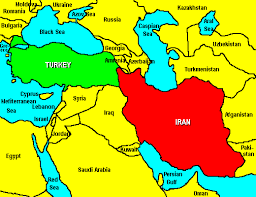
Turkey is one such country. Its foreign policy team has been in overdrive since the first round of Geneva talks took place in October. Turkish Foreign Minister Ahmet Davutoglu started off this month hosting Iranian Foreign Minister Javad Zarif in Ankara. Davutoglu then went to Baghdad on Nov. 7-9 to meet with Iraqi Prime Minister Nouri al-Maliki. Following a statement from Davutoglu in a closed parliament session that hinted at Turkey's restarting its efforts to normalize relations with Armenia, Turkish Prime Minister Recep Tayyip Erdogan and President Abdullah Gul met with their counterparts from Azerbaijan in Ankara on Nov. 12-13. Earlier this week, Davutoglu concluded meetings in Washington on Nov. 18 and will meet with Erdogan in St. Petersburg, Russia, for talks with Russian President Vladimir Putin and Foreign Minister Sergei Lavrov on Nov. 21 before heading to Iran the following week.
Εγγραφή σε:
Αναρτήσεις (Atom)